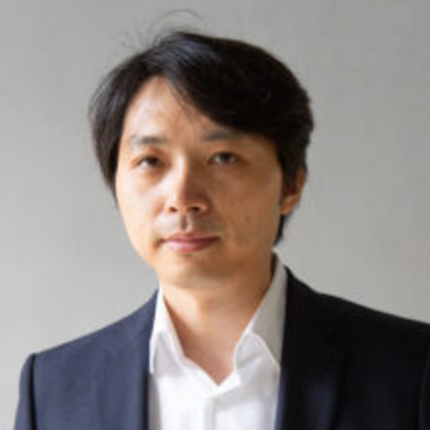
Prof. Dr.-Ing. Yan Xia
W2-Professor
Einrichtungen
Kieferorthopädie
Lebenslauf, Veröffentlichungen und Auszeichnungen
Wissenschaftliche und edukative Tätigkeiten
I am a W2 Professor of Artificial Intelligence in Orthodontics, working at the intersection of computer vision, machine learning, and medical image analysis. My research spans the development and evaluation of state-of-the-art ML/DL methods for medical image generation, semantic and instance segmentation, image registration, disease detection and classification, and treatment-response prediction.
I earned my doctorate at the Pattern Recognition Lab at FAU under the supervision of Prof. Andreas Maier, where the research was conducted in close collaboration with Siemens Healthineers. After completing my PhD, I worked as a postdoctoral researcher at Stanford University and later as a Research Fellow at the University of Leeds under the supervision of Prof. Alejandro Frangi.
My current focus is AI for orthodontics and dentistry, designing clinically reliable AI algorithms that integrate dental imaging with patient data to improve diagnosis, risk assessment, and treatment planning. I work across the full pipeline, from robust representation learning and automated measurement to outcome prediction, and aim to translate AI advances into practical clinical tools.
My team has been working on several research directions to unlock the next wave of AI in orthodontics and dentistry:
•Large-scale self-supervised and foundation-model pretraining: learning strong representations from unlabeled cephalograms, panoramic, CBCT, and intraoral scans to reduce annotation burden and improve robustness across devices and clinics.
•Multi-task and multi-modal learning: unified models that jointly perform landmarking, segmentation, abnormality detection, and measurement, integrating images with EHR/clinical notes, and 3D oral scans, to improve generalization and clinical utility.
•Anatomy- and physics-informed networks: embedding cephalometric and craniofacial constraints (geometry, symmetry, topological consistency, tooth-jaw relationships) into model architectures and loss functions to enforce biologically plausible predictions.
•Longitudinal modeling and treatment-response prediction: learning from time-series records (pre-, mid-, post-treatment) to forecast growth trajectories, anchorage loss risk, root resorption risk, and likely occlusal outcomes under different treatment options.
•3D image analysis such as robust tooth/airway/TMJ segmentation, cephalometry in 3D, automated surgical/orthognathic planning support, and registration between 2D/3D modalities for comprehensive assessment.
Introduction to Artificial Intelligence in Medicine
Our course “Introduction to Artificial Intelligence in Medicine” is funded by the VHB under the special initiative “KI-Kompetenzen im Studium.” The course integrates technical and clinical perspectives to help students work effectively with AI in healthcare. It covers core concepts, applications, ethics, and future trends, focusing on AI literacy and clinical relevance rather than building algorithms from scratch. Students will learn how AI systems process data, where AI is used in medicine, current limitations, and key ethical and regulatory issues. They will also gain skills to evaluate AI literature, perform exploratory data analysis, train standard models, assess performance and feasibility, and collaborate with AI developers to identify practical opportunities.
Selected publications:
- Gaggion N, Matheson BA, Xia Y, Bonazzola R, Ravikumar N, Taylor ZA, Milone DH, Frangi AF, Ferrante E. Multi-view Hybrid Graph Convolutional Network for Volume-to-mesh Reconstruction in Cardiovascular MRI. Medical Image Analysis, 2025:103630.
https://www.sciencedirect.com/science/article/abs/pii/S136184152500177X - Wu K, Xia Y, Ravikumar N, Frangi AF. Compressed sensing using a deep adaptive perceptual generative adversarial network for MRI reconstruction from undersampled K-space data. Biomedical Signal Processing and Control, 2024 Oct 1;96:106560.
https://www.sciencedirect.com/science/article/pii/S1746809424006189 - Bi N, Zakeri A, Xia Y, Cheng N, Taylor ZA, Frangi AF, Gooya A. SegMorph: Concurrent Motion Estimation and Segmentation for Cardiac MRI Sequences. IEEE Transactions on Medical Imaging, 2024 Aug 5.
https://ieeexplore.ieee.org/document/10623527 - Bonazzola R, Ferrante E, Ravikumar N, Xia Y, Keavney B, Plein S, Syeda-Mahmood T, Frangi AF. Unsupervised ensemble-based phenotyping enhances discoverability of genes related to left-ventricular morphology. Nature Machine Intelligence, 2024 Mar;6(3):291–306.
https://www.nature.com/articles/s42256-024-00801-1 - Chen X, Xia Y, Dall'Armellina E, Ravikumar N, Frangi AF. Joint shape/texture representation learning for cardiovascular disease diagnosis from magnetic resonance imaging. European Heart Journal – Imaging Methods and Practice, 2024 Jan;2(1).
https://pmc.ncbi.nlm.nih.gov/articles/PMC11195696/ - Zakeri A, Xia Y, Ravikumar N, Frangi AF. Deep learning for vision and representation learning. In Medical Image Analysis, 2024 Jan 1 (pp. 451–474). Academic Press.
https://www.sciencedirect.com/science/article/abs/pii/B9780128136577000443 - Ravikumar N, Zakeri A, Xia Y, Frangi AF. Deep learning fundamentals. In Medical Image Analysis, 2024 Jan 1 (pp. 415–450). Academic Press.
https://www.sciencedirect.com/science/article/abs/pii/B9780128136577000418 - Lin F, Xia Y, Deo Y, MacRaild M, Dou H, Liu Q, Wu K, Ravikumar N, Frangi AF. Unsupervised Domain Adaptation for Brain Vessel Segmentation Through Transwarp Contrastive Learning. In IEEE ISBI 2024, May 27 (pp. 1–5).
https://ieeexplore.ieee.org/document/10635148 - Lin F, Xia Y, MacRaild M, Deo Y, Dou H, Liu Q, Cheng N, Ravikumar N, Frangi AF. GS-EMA: Integrating Gradient Surgery Exponential Moving Average with Boundary-Aware Contrastive Learning for Enhanced Domain Generalization in Aneurysm Segmentation. In IEEE ISBI 2024, May 27.
https://ieeexplore.ieee.org/document/10635397 - Xia Y, Ravikumar N, Lassila T, Frangi AF. Virtual high-resolution MR angiography from non-angiographic multi-contrast MRIs: synthetic vascular model populations for in-silico trials. Medical Image Analysis, 2023 Apr 20:102814.
https://www.sciencedirect.com/science/article/pii/S1361841523000750 - Lin F, Xia Y, Ravikumar N, Liu Q, MacRaild M, Frangi AF. Adaptive semi-supervised segmentation of brain vessels with ambiguous labels. In MICCAI 2023, Oct 8 (pp. 106–116). Springer.
https://link.springer.com/chapter/10.1007/978-3-031-58171-7_11 - Deo Y, Bonazzola R, Dou H, Xia Y, Wei T, Ravikumar N, Frangi AF, Lassila T. Learned Local Attention Maps for Synthesising Vessel Segmentations from T2 MRI. In Simulation and Synthesis in Medical Imaging 2023, Oct 7 (pp. 32–41). Springer.
https://link.springer.com/chapter/10.1007/978-3-031-44689-4_4 - Lin F, Xia Y, Song S, Ravikumar N, Frangi AF. High-Throughput 3DRA Segmentation of Brain Vasculature and Aneurysms using Deep Learning. Computer Methods and Programs in Biomedicine, 2023 Jan 15:107355.
https://www.sciencedirect.com/science/article/abs/pii/S0169260723000226 - Wang Y, Ranner T, Ilett TP, Xia Y, Cohen N. A monolithic optimal control method for displacement tracking of Cosserat rod with application to reconstruction of C. elegans locomotion. Computational Mechanics, 2022 Nov 14.
https://link.springer.com/article/10.1007/s00466-022-02247-x - Chen X, Xia Y, Ravikumar N, Frangi AF. A Joint Network for Segmentation and Discontinuity-preserving Registration on Cardiac MR Images. arXiv, 2022 Nov 24.
https://arxiv.org/abs/2211.13828 - Xia Y, Chen X, Ravikumar N, Kelly C, Attar R, Aung N, Neubauer S, Petersen SE, Frangi AF. Automatic 3D+t Four-Chamber CMR Quantification of the UK Biobank. Medical Image Analysis, 2022 May 27:102498.
https://www.sciencedirect.com/science/article/pii/S1361841522001451 - Xia Y, Ravikumar N, Frangi AF. Learning to complete incomplete hearts for population analysis of cardiac MR images. Medical Image Analysis, 2022 Apr 1;77:102354.
https://www.sciencedirect.com/science/article/pii/S136184152200007X - Xia Y, Ravikumar N, Frangi AF. Image Imputation in Cardiac MRI and Quality Assessment. In Biomedical Image Synthesis and Simulation, 2022 (pp. 347–367). Academic Press.
https://www.sciencedirect.com/science/article/abs/pii/B9780128243497000244 - Chen X, Ravikumar N, Xia Y, Attar R, Diaz-Pinto A, Piechnik SK, Neubauer S, Petersen SE, Frangi AF. Shape registration with learned deformations for 3D shape reconstruction from sparse and incomplete point clouds. Medical Image Analysis, 2021 Dec 1;74:102228.
https://www.sciencedirect.com/science/article/pii/S1361841521002735 - Chen X, Xia Y, Ravikumar N, Frangi AF. CAR-Net: Unsupervised Co-Attention Guided Registration Network for Joint Registration and Structure Learning. arXiv, 2021 Jun 11.
https://arxiv.org/abs/2106.06637 - Chen X, Xia Y, Ravikumar N, Frangi AF. A Deep Discontinuity-Preserving Image Registration Network. In MICCAI 2021, Sep 27 (pp. 46–55). Springer.
https://iopscience.iop.org/article/10.1088/1361-6560/accdb1 - Xia Y, Ravikumar N, Greenwood JP, Neubauer S, Petersen SE, Frangi AF. Super-resolution of cardiac MR cine imaging using conditional GANs and unsupervised transfer learning. Medical Image Analysis, 2021 Jul 1;71:102037.
https://www.sciencedirect.com/science/article/pii/S1361841521000839 - Geng M, Tian Z, Jiang Z, You Y, Feng X, Xia Y, Yang K, Ren Q, Meng X, Maier A, Lu Y. PMS-GAN: Parallel multi-stream generative adversarial network for multi-material decomposition in spectral computed tomography. IEEE Transactions on Medical Imaging, 2020 Oct 16;40(2):571–584.
https://ieeexplore.ieee.org/document/9226471